

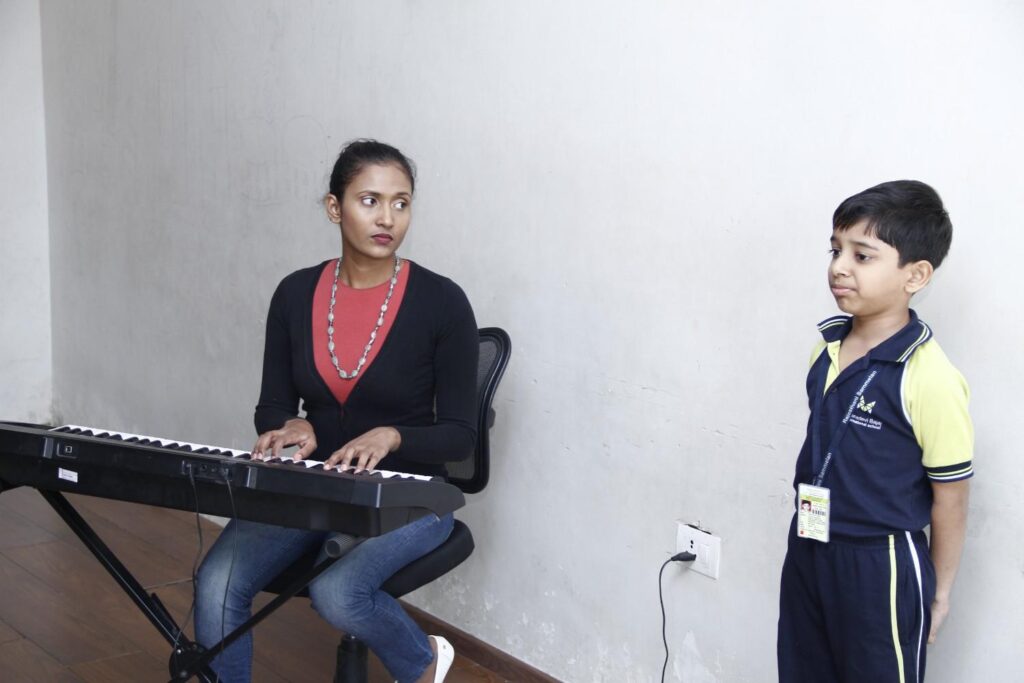
Music is often treated as an activity that sits outside academics. But in a strong school environment, it does more than add variety to the timetable. Music helps children listen closely, express emotion, work with others and understand what it means to be part of a shared experience.
For parents choosing a Cambridge school in Mumbai, this matters because education cannot be limited to subject knowledge alone. Children also need emotional awareness, communication, confidence and the ability to connect with people from different backgrounds. Music gives students a natural way to practise these qualities.
At MBIS Mumbai, music and dance are part of a wider creative learning environment where students can explore expression, rhythm, movement and confidence in ways that classroom answers alone may not always allow.
Music Teaches Students to Listen Before They Respond
One of the strongest benefits of music education is that it teaches children to listen with attention. In a music class or performance setting, students cannot focus only on themselves. They need to hear rhythm, tone, timing, pauses and the voices or instruments around them.
This kind of listening matters beyond music. A child who learns to listen carefully in a group performance is also practising patience, awareness and respect for others. These are the same qualities that support classroom discussions, teamwork and meaningful friendships.
For parents searching for the best international schools in Mumbai, this is an important filter. A good school should not only help children answer correctly. It should also help them listen, respond and participate with sensitivity.
Music Gives Children a Language for Expression
Not every child expresses themselves easily through words. Some children are quiet. Some are still developing confidence. Some feel deeply but do not always know how to explain what they feel.
This is where music learning benefits become visible. Music gives children another language. Through singing, rhythm, movement, instruments and performance, students learn to communicate mood, feeling and meaning without depending only on spoken answers.
The importance of music education lies in this emotional opening. It allows children to explore expression in a way that feels less pressured than formal speaking. A child who may hesitate to speak in front of a class may still participate through rhythm, song or movement. Over time, that participation can support confidence and self-awareness.
The hidden reality is that expression cannot be forced out of children. It has to be invited. Music does that gently.
Performing Arts Build Confidence Through Shared Participation
Parents often connect confidence with public speaking, but confidence can also grow through music and performance. In performing arts education, students learn how to prepare, practise, coordinate and present as part of a group.
This is different from standing alone and being judged. Music often creates shared responsibility. Students understand that their role matters, but so does everyone else’s. They learn timing, cooperation and discipline without the experience feeling purely academic.
This is one reason the role of music in education is so valuable. It helps students experience confidence through participation rather than pressure. Whether children are singing together, practising rhythm, preparing for a school performance or responding to music in class, they are learning how to show up, contribute and trust the group.
India’s National Curriculum Framework for School Education 2023 places Art Education as a key curricular area and includes music, dance, movement and theatre within it. For parents, this is an important signal: Indian education is increasingly recognising that creative learning is not a distraction from development. It is part of how children build sensitivity, imagination, confidence and connection.
Music Helps Students Understand Difference
In an international school environment, students are often exposed to different cultures, languages, traditions and perspectives. Music makes this exposure more human.
Children may not always understand another culture through explanation alone. But when they hear a song, rhythm, instrument or performance style from another tradition, they begin to experience difference emotionally. Music can make diversity feel less abstract and more personal.
This is an important part of music education for students. It helps children recognise that people may express joy, celebration, memory, identity or belonging in different ways. That awareness supports empathy because students begin to understand that difference is not something to fear. It is something to listen to.
At MBIS Mumbai, where international education, inquiry-led learning and multicultural exposure shape the school experience, music supports a deeper sense of participation and community.
Why Music Belongs in a Complete Education?
Education today cannot only prepare students to score well. It must also help them become more aware, adaptable, expressive and collaborative. Music supports these qualities through practice, listening, coordination and expression.
A student who participates in music learns discipline through repetition. A student who performs with others learns teamwork. A student who responds to rhythm and melody develops awareness. A student who explores different musical traditions develops openness.
For parents evaluating a Cambridge school in Mumbai, the deeper question is not only whether the school offers strong academics. It is whether the school gives children enough opportunities to grow as listeners, collaborators and expressive learners.
Music helps students build empathy because they learn to listen. It helps them build expression because they learn to communicate feeling and meaning. It helps them build community because they understand that their voice becomes stronger when it works with others.
At MBIS Mumbai, music reflects a larger educational belief: children should learn how to succeed individually. They should learn how to listen deeply, express thoughtfully and participate meaningfully in a world where understanding others matters as much as being heard.
FAQs
1. What are the main benefits of music education for students?
The main benefits of music education include better listening, creativity, emotional expression, confidence, teamwork, discipline and cultural awareness.
2. Why is music important in school education?
The importance of music education lies in helping students express themselves, collaborate with others, understand emotions and experience learning beyond textbooks.
3. How does music support empathy in students?
Music supports empathy by encouraging students to listen carefully, understand different forms of expression and appreciate cultures, emotions and perspectives beyond their own.
4. What should parents look for in music education at school?
Parents should look for meaningful music education for students, where music is connected to creativity, confidence, participation, cultural exposure and overall student development.
