

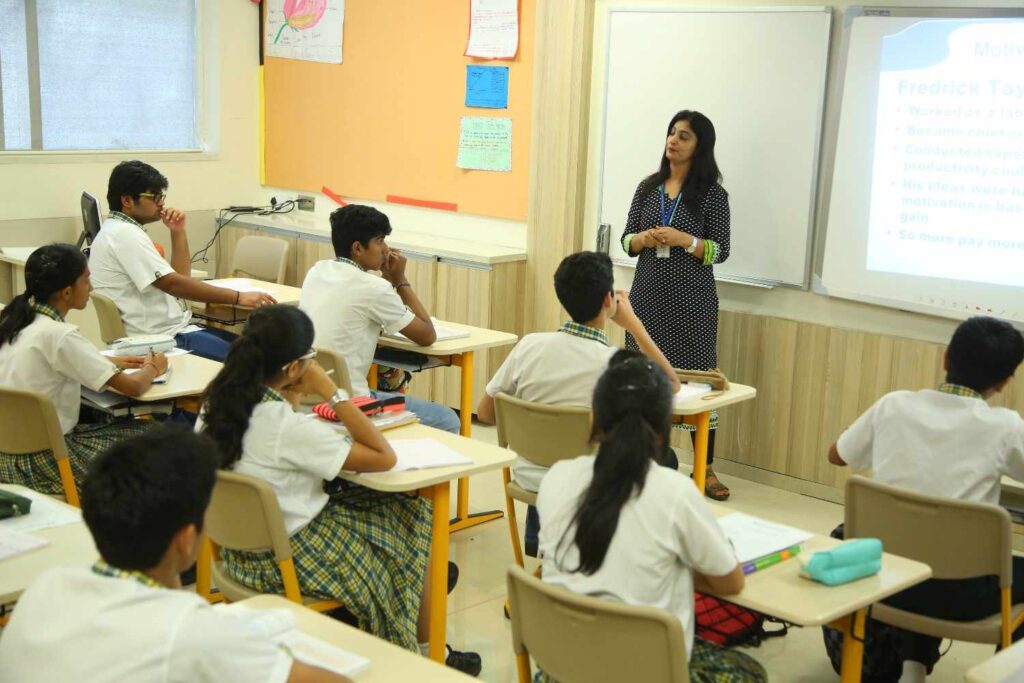
Many students know the answer but still hesitate to raise their hand. They may fear being wrong, being laughed at or not finding the right words quickly enough. For parents, this hesitation can be easy to miss because it does not always show up in marksheets.
But confidence in school is not only about performing on stage. It begins in smaller moments: asking a question, explaining a thought, joining a discussion, presenting a project or saying, “I don’t understand this yet.”
For parents choosing a Cambridge school in Mumbai, this matters. A strong academic environment should not only help children learn the right answers. It should help them develop the confidence to express what they know, question what they do not understand, and participate meaningfully in the learning process.
Confidence Is Not Separate from Learning
Many parents treat confidence as a personality trait. A child is either confident or quiet. But in school, confidence is also shaped by environment.
When students feel safe to speak, they engage more deeply with lessons. They learn to organise their thoughts, explain ideas clearly, listen to different viewpoints and respond with maturity. That is why classroom communication is not an extra skill. It is part of how learning becomes visible.
For parents searching for the best international schools in Mumbai, this becomes an important filter: does the school only teach content, or does it help children use that knowledge with clarity and confidence?
The Classroom Is Where Student Voice Begins
Strong communication does not begin with a microphone. It begins with everyday participation.
A student who explains a project to classmates, asks a thoughtful question, shares an opinion during group work or reflects on an activity is already practising expression. These small moments slowly build the foundation for stronger communication skills for students.
In international learning environments, this becomes even more important. Students are expected to think independently, discuss ideas, understand different perspectives and connect concepts with the world around them. That cannot happen if children are only trained to memorise and repeat.
At MBIS Mumbai, inquiry-led classrooms, student participation and parent-school communication help confidence become part of everyday learning, not a separate activity reserved only for formal events.
Public Speaking Is Built Before the Stage
Parents often connect public speaking skills for students with annual days, debates or competitions. Those platforms are useful, but they are not the starting point.
The real foundation is built through routine classroom exposure. When children speak in small groups, present simple ideas, participate in class discussions or collaborate on projects, they become more comfortable with being heard. Over time, speaking becomes less intimidating because it becomes familiar.
School engagements such as student presentations, performances, collaborative projects and cultural celebrations can support this process when they are connected to learning. They give children opportunities to speak, listen, participate and understand that communication is not about perfection. It is about expression, preparation and courage.
The hidden reality is that children do not suddenly become confident speakers because they are pushed onto a stage. They become confident when speaking feels safe, regular and meaningful.
How Schools Can Build Confidence in Students?
The question of how to build confidence in students cannot be answered by simply telling them to “speak up.” That advice is easy to give and usually useless.
Confidence grows when teachers create repeated opportunities for participation. It grows when quieter students are noticed, encouraged and given time. It grows when mistakes are treated as part of learning rather than a reason for embarrassment.
Useful confidence building activities for students include group discussions, storytelling, role play, project presentations, peer collaboration, reflective sharing, music and performance. But the activity itself is not enough. What matters is how the school uses these experiences to help children express, listen, think and improve.
A child who feels supported is more likely to try. A child who tries regularly is more likely to improve. That is how confidence becomes part of learning.
Why This Matters for the Future?
The future will not only reward students who know the correct answer. It will reward students who can explain their thinking, ask better questions, collaborate with others and adapt to new situations.
This is why parents should look beyond curriculum names alone. A good international curriculum should build academic understanding, but it should also help children become clear thinkers and confident communicators.
At MBIS Mumbai, the larger focus on international education, inquiry, classroom expression and parent-school partnership supports this balance. Students need knowledge, but they also need the confidence to use that knowledge well.
When children are seen, heard and encouraged to participate, they are not only preparing for exams. They are building greater clarity, confidence and readiness for the world beyond school.
FAQs
1. Why is classroom communication important for students?
Classroom communication helps students’ express ideas, ask questions, listen to others and participate actively in learning. It also builds confidence and improves conceptual understanding.
2. How can schools improve communication skills for students?
Schools can improve communication skills for students through discussions, presentations, group work, storytelling, project-based learning and regular opportunities to speak in class.
3. Are public speaking skills only developed through competitions?
No. Public speaking skills for students begin with everyday classroom participation. Competitions and stage events help, but confidence is first built through regular speaking opportunities.
4. What should parents look for in a Cambridge school?
Parents choosing a Cambridge school in Mumbai should look at academic guidance, classroom participation, teacher support, communication opportunities, parent-school engagement and how the school builds student confidence.
