

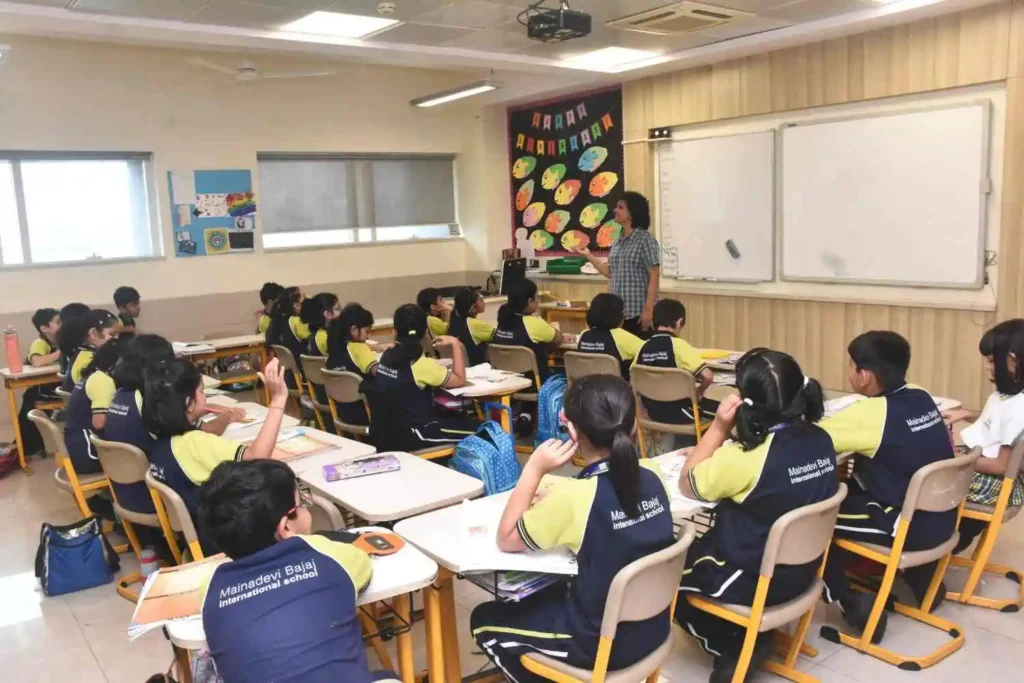
A student can remember an answer without fully understanding it. Ask them to explain it and the gaps often become visible.
Explaining an idea requires students to decide what they mean, organise their reasoning, connect evidence to a conclusion and make the relationship between those parts clear. Speaking is therefore not only a way of expressing thought. It can also help students structure and examine it.
That makes communication skills for students‘ part of meaningful learning, rather than something reserved for presentations or public speaking.
Speaking Forces Ideas to Become Clearer
An idea can seem obvious until someone asks, “Why?”
A student might know that a historical event occurred. Explaining why it happened requires them to select relevant information, put it in order and make connections explicit. If those connections are weak, the explanation exposes them.
The Education Endowment Foundation identifies structured questioning and discussion as oral-language approaches that can support learning when deliberately integrated into teaching. The value is not conversation for its own sake, but what students are asked to do with language.
The Importance of Asking Questions
Answers are not always the beginning of learning. Often, the better starting point is a question.
“Why did this happen?” looks for a cause. “How do we know?” asks for evidence. “What might we be missing?” challenges an assumption. “Is there another explanation?” tests the first conclusion.
This is why the importance of asking questions extends beyond classroom participation. Questions can help students identify gaps in understanding and decide what to investigate next.
Teachers can support this by using prompts that encourage students to investigate rather than immediately resolving uncertainty.
Critical Thinking Needs Language
Critical thinking is often treated as something that happens entirely inside the mind. In practice, students need language to demonstrate and develop it.
“I disagree” is a position. “I disagree because the evidence suggests something else” introduces reasoning. Considering why another viewpoint may have merit adds another layer of evaluation.
This is where critical thinking skills for students become visible: examining evidence, comparing interpretations and reconsidering conclusions.
Discussion alone will not automatically produce these abilities. Students need structure, modelling and feedback. The Education Endowment Foundation’s guidance on metacognition and self-regulation similarly emphasises explicit teaching and guided practice when developing independent learning approaches.
Confidence Is Built Through Capability
So, how to build confidence in students without reducing confidence to simply “speaking more”?
Start with capability.
Students are more likely to contribute when they have knowledge to draw on, time to form an idea and an understanding of how to support what they are saying. A classroom that allows students to test an explanation, receive feedback and try again gives them repeated experience of thinking aloud without requiring perfection.
Confidence should include being willing to say, “I am not sure,” ask a question, listen and revise an idea.
Teacher support remains important. Student agency does not mean removing guidance. Effective scaffolding can help students move from supported reasoning towards greater independence.
What Parents Should Look For
Parents who want to understand how a school develops communication and thinking should look beyond formal speaking activities.
The revealing questions concern everyday lessons:
- Do students explain how they reached an answer?
- Are they encouraged to ask questions that extend an idea?
- Do teachers probe reasoning rather than simply mark answers right or wrong?
- Are students expected to support claims with evidence?
- Can they disagree respectfully?
- Are they encouraged to reconsider a conclusion?
These practices show whether communication is woven into learning or treated as a separate skill.
They can also contribute to a global perspective. Engaging with unfamiliar viewpoints requires students to listen carefully, understand another position and consider whether new information should change their own thinking.
Where Students Put Communication into Practice
Communication becomes stronger when students have authentic opportunities to use it.
At Mainadevi Bajaj International School, MBIMUN gives students a platform to engage with complex global issues while developing critical thinking, effective communication, negotiation and collaboration. MBIS’s recent MBIMUN 2.0 event highlighted these skills as central to the experience.
The TED-Ed Super Speakers Programme provides another platform for students to cultivate their voices, with a focus on public speaking and critical thinking. MBIS has also hosted TEDx Youth events, exposing students to ideas and perspectives beyond the classroom.
These experiences turn communication from an abstract skill into practice. Students research an issue, form a position, listen to other perspectives and make their ideas understandable.
For families considering MBIS Mumbai, this provides an example of how communication can support the development of independent thinking and engagement with different perspectives.
Learning to speak, at its best, is not preparation for a presentation. It is practice in making thought precise.
FAQs
Why are communication skills important for students?
Communication helps students organise ideas, explain reasoning, listen to different perspectives and participate actively in learning.
Why is asking questions important for students?
Questions can help students identify gaps in understanding, investigate evidence, challenge assumptions and explore alternative explanations.
How do discussions develop critical thinking skills for students?
Well-structured discussions allow students to explain claims, evaluate evidence, consider other perspectives and revise their conclusions.
How can parents build confidence in students?
Parents can encourage children to explain their reasoning, ask questions, express considered opinions and view mistakes and feedback as normal parts of learning.
